
What we treat
Knee Pain
One-on-one physical therapy for runner's knee, IT band pain, patellar tendinopathy, meniscus injuries and ACL rehab in Marietta & East Cobb. Book an evaluation.
Book an AppointmentUnderstanding the condition
Understanding knee pain
One-on-one physical therapy for runner's knee, IT band pain, patellar tendinopathy, meniscus injuries and ACL rehab in Marietta & East Cobb. Book an evaluation.
Knee Pain Treatment in Marietta and East Cobb
Knee pain can stop you on stairs, in the squat rack, on a run or at the bottom of a soccer field. Whether it came on gradually or from a twist or a hit, most knee problems respond well to a targeted plan that strengthens the hip and the knee together. At Prevent & Restore, your 90-minute one-on-one evaluation finds what's overloading your knee. Then we progress you back to full activity with clear milestones.
Common knee conditions we treat
- Patellofemoral pain (runner's knee). Pain around or behind the kneecap with stairs, squatting, running or sitting for a long time. Pain from more load on the kneecap joint than it's ready for. We need to determine whether training matches workload. If not, the knee needs to be loaded and prepped better to accept the load on it.
- IT band syndrome. Pain on the outside of the knee, along the IT band, common in runners and cyclists. The IT band attaches your hip to your knee and can be stressed when the knee tends to collapse inward during squatting and running activities. We look at movements such as the squat to determine how the knee is tracking over the foot. Improper knee mechanics can place more stress on the outside of the knees.
- Patellar tendinopathy (jumper's knee). Pain and overload of the tendon that attaches the kneecap to the shin bone, or tibia. Extremely common injury in those who ramp up activity in their knee too fast. Pain just below the kneecap with jumping, sprinting or deep squats.
- Meniscus tears, both degenerative tears and tears from a twisting injury. Meniscus refers to a surface of cartilage that acts as the shock absorber in the knee during impact activities such as running and jumping.What is the extent of the meniscus injury and is surgery appropriate?
- Ligament sprains and tears, including ACL, MCL and PCL, plus rehab before and after ACL reconstruction. These ligaments help to limit the amount of force on the knee and allow the knee to bend and twist in many directions. Without these, instability may be apparent. Much like meniscus tears, we need to determine stability and strength around the knee and if surgery is appropriate
- Knee osteoarthritis. Age-related wear of the cartilage and other tissues that minimize contact and compression in the joint. How is this condition affecting your daily routine? If severe, surgery may be warranted. If not, conservative management is recommended.
- Rehab after knee surgery, including arthroscopy and total knee replacement. In coordination with your surgeon's protocol.
When to see a doctor first
See a physician promptly if your knee swelled up within a few hours of an injury, you heard a pop and can't bear weight, the knee locks and won't straighten, it gives way repeatedly, or it's red, hot and swollen with fever. Calf pain and swelling, especially after surgery or a long trip, needs urgent medical attention to rule out a blood clot.
How we treat knee pain
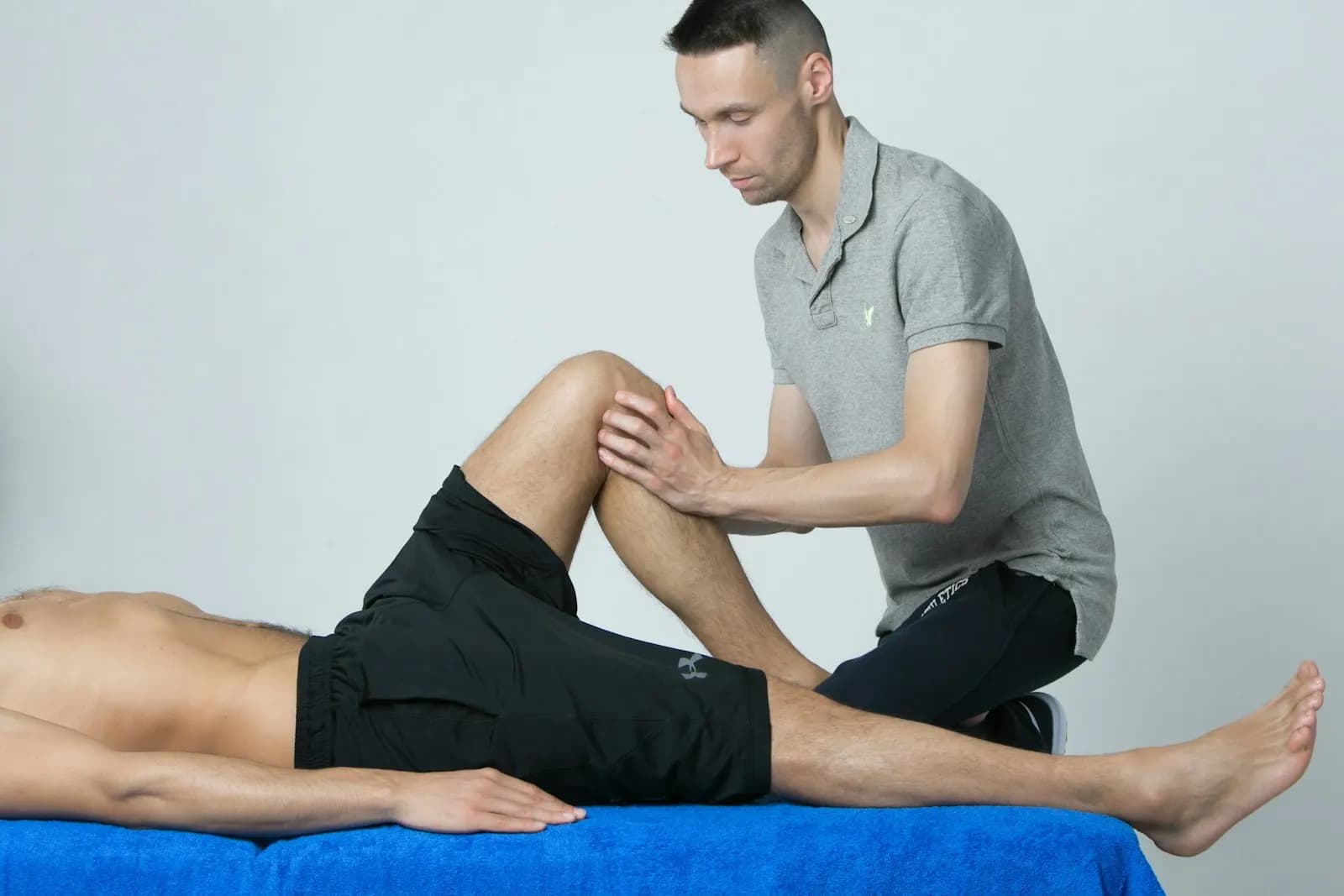
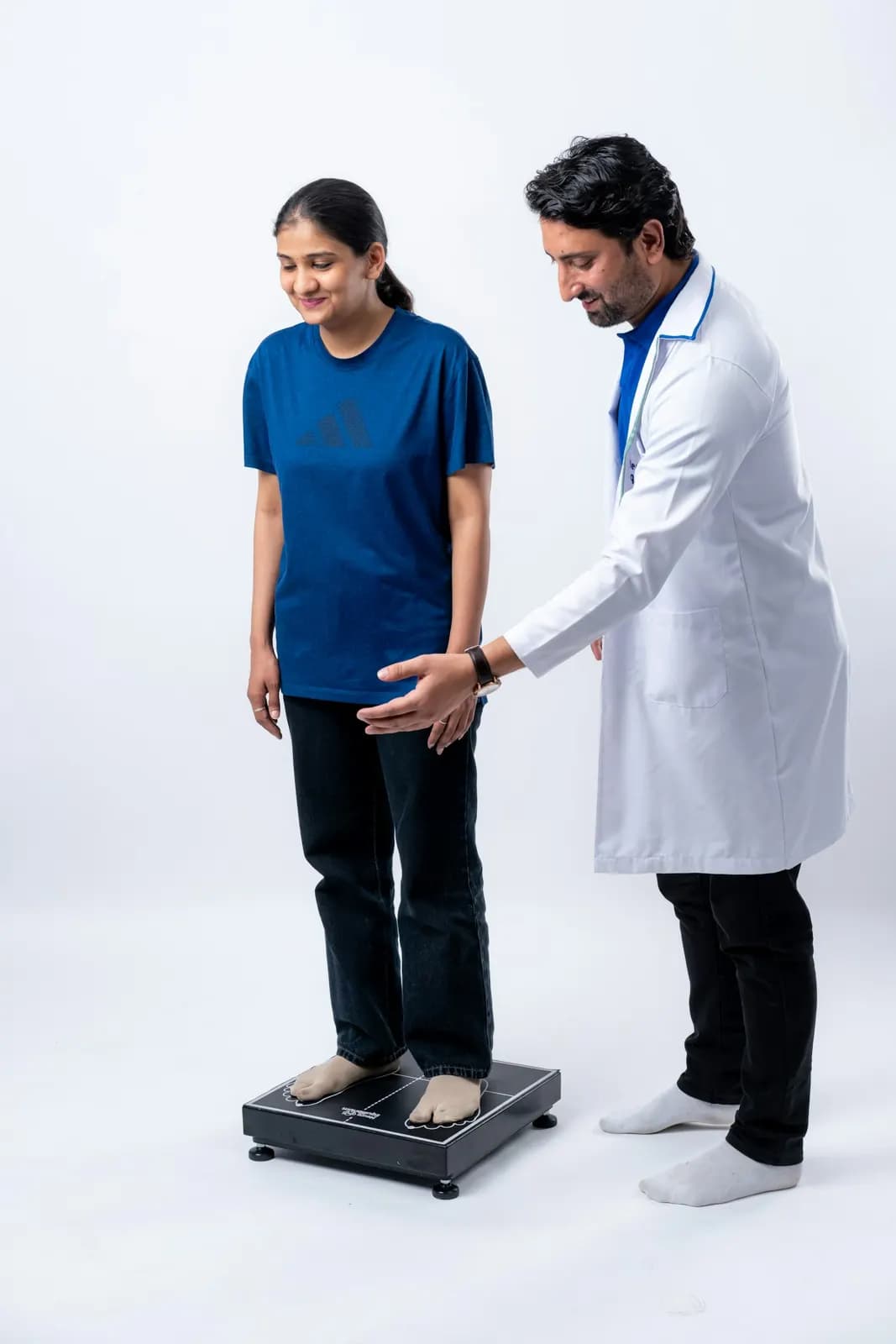
Your 90-minute evaluation includes strength testing of the quads, hamstrings and hips, single-leg control and hop testing when appropriate, ligament and meniscus testing, and a running or movement analysis if that's where it hurts.
60-minute follow-ups typically include:
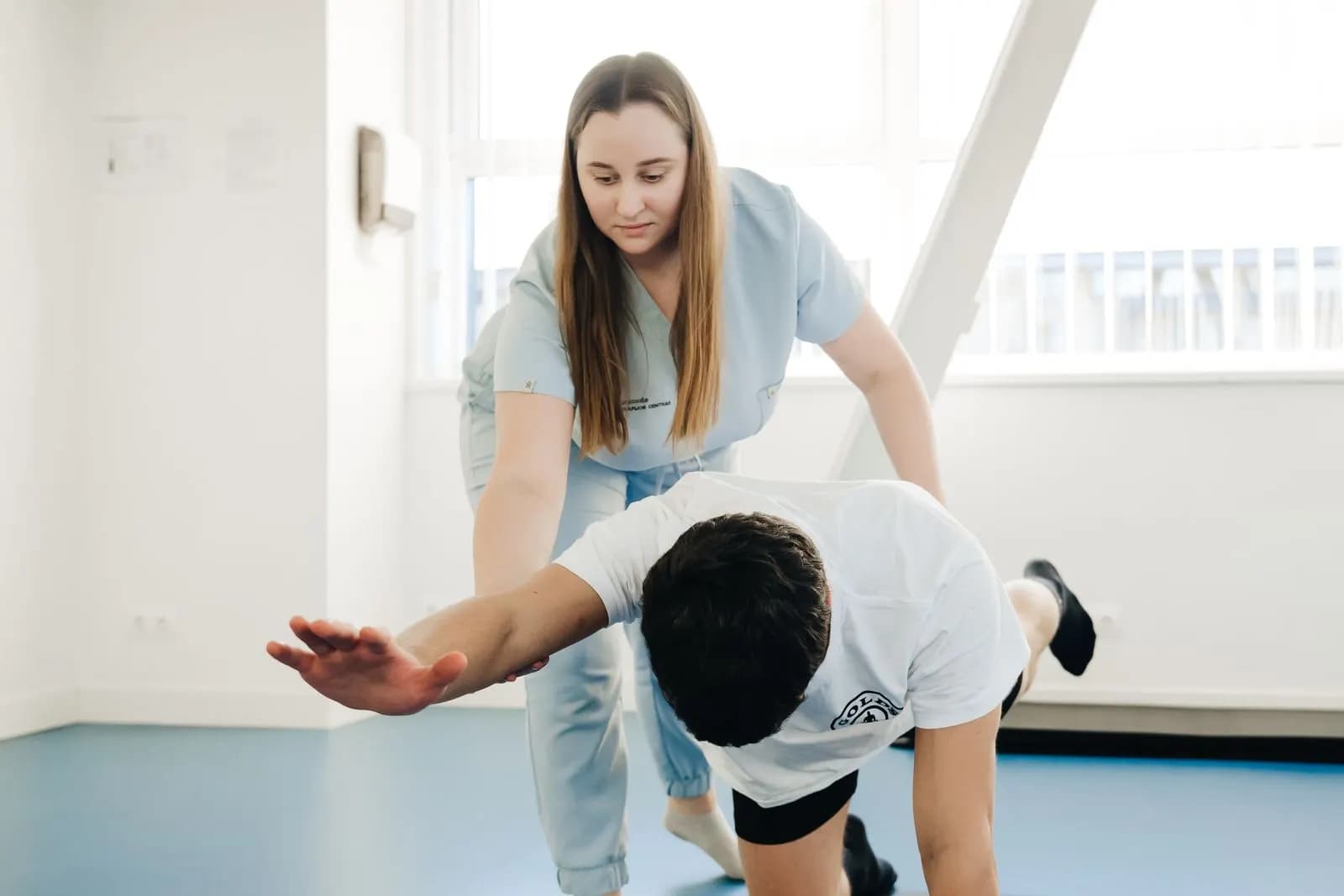
- Combined hip and knee strengthening, progressed from pain-calming exercises to heavy, sport-ready strength.
- Load management for running, lifting and jumping, adjusting volume and intensity without stopping everything.
- Manual therapy to restore motion, especially after surgery or with arthritis.
- Running and movement retraining, such as cadence, step width and landing mechanics.
- Return-to-sport testing, with objective strength and hop benchmarks before you're cleared, especially after ACL injuries.
Most overuse knee pain improves meaningfully within 6 to 12 weeks. ACL rehab is a longer road, typically 9 months or more after surgery, and we'll map it out phase by phase.
What the research says
The 2018 international consensus statement on patellofemoral pain (Collins et al., British Journal of Sports Medicine) recommends exercise therapy as the main treatment, and specifically recommends combining hip-focused and knee-focused exercises over knee exercises alone. It also supports foot orthoses for short-term pain relief, and it advises against using knee mobilization or electrical modalities on their own.
The honest limits: the same panel found the evidence for taping, bracing, dry needling and gait retraining for patellofemoral pain uncertain, so we use those selectively, not routinely. For degenerative meniscus tears in middle-aged adults, several trials have found arthroscopic surgery no better than exercise therapy for most people, but traumatic tears that lock the knee may need a surgical opinion.
This page covers: IT Band Syndrome, Patellofemoral Pain Syndrome, Patellar Tendinopathy (Jumpers knee), Meniscus Tears, Ligamentous Tears/sprains, Knee osteoarthritis.
Condition 01
IT Band Syndrome
Overview
Pain on the outside of the knee, along the IT band, common in runners and cyclists. The IT band attaches your hip to your knee and can be stressed when the knee tends to collapse inward during squatting and running activities. We look at movements such as the squat to determine how the knee is tracking over the foot. Improper knee mechanics can place more pain on the outside of the knees.
Condition 02
Patellofemoral Pain Syndrome
Overview
Pain around or behind the kneecap with stairs, squatting, running or sitting for a long time. Pain due to loads on the quad tendon that the tendon cannot handle. The quad tendon attaches your quad muscles to your patella, or kneecap. Need to determine if training matches with workload. If not, the tendon needs to be loaded and prepped better to accept the load on it.
Condition 03
Patellar Tendinopathy (Jumpers knee)
Overview
Inflammation of the tendon that attaches the kneecap to the shin bone, or tibia. Extremely common injury in those that ramp up activity in their knee too fast. Pain just below the kneecap with jumping, sprinting or deep squats.
Condition 04
Meniscus Tears
Overview
both degenerative tears and tears from a twisting injury. Meniscus refers to a surface of cartilage that acts as the shock absorber in the knee during impact activities such as running and jumping. What is the extent of the meniscus injury and is surgery appropriate?
Condition 05
Ligamentous Tears/sprains
Overview
including ACL, MCL and PCL, plus rehab before and after ACL reconstruction. These ligaments help to limit the amount of force on the knee and allow the knee to bend and twist in many directions. Without these, instability will be apparent. Much like meniscus tears, we need to determine stability and strength around the knee and if surgery is appropriate.
Condition 06
Knee osteoarthritis
Overview
Age-related wear of the cartilage and other tissues that minimize contact and compression in the joint. How is this condition affecting your daily routine? If severe, surgery may be warranted. If not, conservative management is recommended.
Frequently asked questions
Should I stop running?
Usually not completely. We'll often reduce volume or intensity and keep you running while you build strength.
Will a knee brace help?
Some braces can help with confidence or short-term pain, but they don't replace strength. We'll tell you if a brace makes sense for your situation.
Do I need surgery for a meniscus tear
Many meniscus tears, especially degenerative ones, do well with physical therapy. A knee that truly locks or keeps catching may need a surgeon's evaluation.
Do you do ACL rehab?
Yes, both before and after surgery, through return-to-sport testing. We coordinate with your surgeon throughout.
Ready to feel better?
Let’s take the next step toward better movement and less knee pain.